We envision an Africa where indigenous knowledge informs policy decisions, guides innovation, and shapes development.
Our Story
The Sahara Centre was born from a recognition that Africa’s biggest challenge is not a lack of ideas, but a disconnection between its solutions and its realities. For too long, the continent has looked outward for answers to its challenges and adopted models that do not align with African cultural, social, or economic systems.
We live in societies where our traditions and knowledge once shaped leadership behaviour, community development, and character development. Today, these traditions are often dismissed rather than celebrated as strategic tools. On our path to social transformation, we seem to be losing our sense of identity, belonging and place, weakening the very foundation upon which strong, self-determined societies emerge.
The Sahara Centre is on a mission to promote African solutions for African societies; understanding that context matters, and that there is a lot that we can learn from indigenous African intelligence, which can form the foundation for contemporary solutions to address our governance, innovation, and development challenges
Why The Sahara Centre
The desert’s vastness mirrors the scope of indigenous knowledge across the continent, while its life-sustaining oases represent the practical solutions that emerge when this knowledge is properly understood and applied.
Our Journey
2019-2023: Foundation Years
2019
The Sahara Centre established in Lagos with focus on creative industry development
2020
First research partnerships
2021
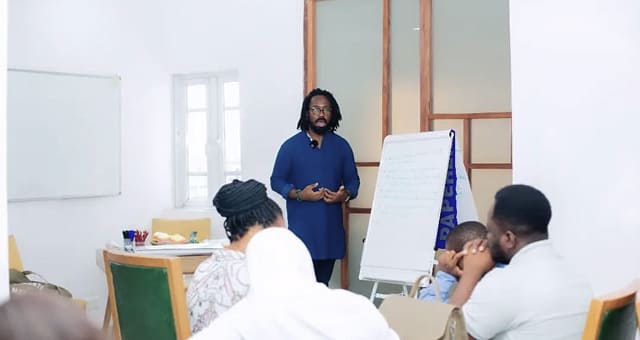
Launch of Lantern Laboratory program with inaugural cohort of 25 participants
- Secured initial funding and established Lagos office
- Developed core research methodology for indigenous knowledge translation
- Built initial network of traditional knowledge keepers and academic partners
- Published first white papers on traditional governance and economic systems
2024 - 2025
Institutional Development
- Expansion of research program with whitepaper development
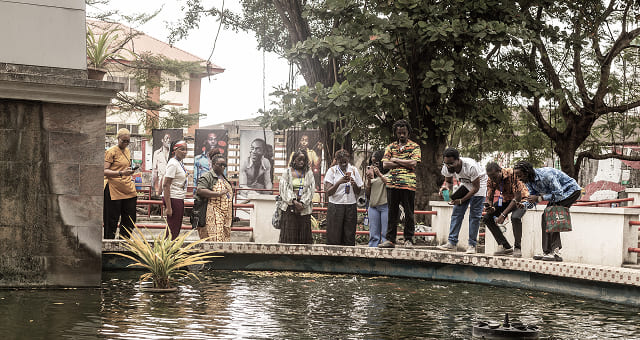
- Launch of the Mangrove Sessions
- Strategic engagement with government officials and traditional leaders
- Launch of fellowship program and international partnership expansion
What Guides Us
Cultural Respect
We approach traditional knowledge with deep respect, understanding that we are custodians, not owners, of the wisdom we study and translate. Every research project honors the communities and traditions that preserve these knowledge systems.
In Practice
- Community consent required for all research
- Traditional knowledge holders credited and compensated
- Sacred or sensitive information protected and respected
- Cultural protocols observed in all engagements
Intellectual Rigor
We maintain the highest standards of academic and research excellence while ensuring that scholarly rigor enhances rather than diminishes cultural authenticity.
In Practice
- Peer review by both academic experts and cultural practitioners
- Transparent methodology and collaborative validation
- Evidence-based conclusions supported by multiple sources
- Academic partnerships with leading global institutions
Practical Relevance
We focus on research and programming that produces tangible results for policymakers, business leaders, and community practitioners rather than purely academic knowledge.
In Practice
- Implementation support for all research recommendations
- Training programs that build practical skills
- Partnership development for scaling applications
- Impact measurement and continuous improvement
African Leadership
We ensure that African voices, perspectives, and leadership guide our work while engaging international partners as collaborators rather than directors of our agenda.
In Practice
- African leadership across all organizational levels
- Continental research priorities set by African institutions
- International partnerships designed for mutual benefit
- African intellectual independence in global engagements
Collaborative Excellence
We believe that the most powerful insights emerge from collaboration between traditional knowledge keepers, contemporary scholars, policymakers, and practitioners.
In Practice
- Multi-stakeholder research and programming
- Partnership development across sectors and institutions
- Inclusive participation in convenings and workshops
- Knowledge sharing that benefits all participants
Innovation with Tradition
We demonstrate that innovation and tradition are complementary rather than competing forces, showing how indigenous knowledge can inform cutting-edge solutions.
In Practice
- Technology platforms that enhance traditional knowledge transmission
- Contemporary applications that honor traditional contexts
- Innovation processes that incorporate traditional wisdom
- Modern institutions that integrate traditional governance principles